20200923

518. Ηθική κατήχηση

 
Ανάγκη για έκφραση. Τόσος καιρός στον πάγο, ομφαλοσκοπώντας στο τίποτα.
Και να καλούμαι να εκφράζομαι χωρίς ρήματα, λιτά απλά κατανοητά. Για να κερδίζεται χρόνος και να μπορούμε να πάμε παραπέρα.
Ποιοί? Πώς? Μα κυρίως πού?

Ποιος είναι δηλαδή ο στόχος?
Η ευημερία?
Η δικαιοσύνη?
Η αυτονομία?
Το κέρδος? Το πρόσκαιρο? Το μακροχρόνιο?
Η βέλτιστη λύση?

Ρομαντισμός Vs Ρεαλισμός - Politics

Αν διηύθυνες δλδ ένα εστιατόριο, όχι τίποτα τρομερό με αστέρια Μισελέν κέτσι αλλά ένα αξιόλογο με ποιοτικό φαγητό, φρέσκο λάδι και γενναιόδωρες ποσότητες κι ερχόταν ένας πελάτης με γεμάτο πορτοφόλι και σού ζητούσε να τού φτιάξεις σκατά, θα τα έφτιαχνες? Κυριολεκτικά σκατά, αλλά σε τιμή απίστευτη. Όσο και να σε πλήρωνε, θα τα μαγείρευες τα σκατά?  

Άλλοι απαντούν "ναι" άλλοι "όχι". Εξαρτάται από τις ανάγκες (υπαρκτές ή κατασκευασμένες), τις προσδοκίες καθώς κι από το αξιακό σύστημα του καθενός.


Δεν υπάρχει σωστή και λάθος απάντηση αφού, καλώς ή κακώς, αυτή μπορεί να αλλάξει από τις συνθήκες κι όπως αυτές διαμορφώνονται από παράγοντες εκτός της άμεσης δυνατότητας παρέμβασής μας.
Αν ωστόσο αποφασίσεις να συμβιβαστείς και να παράσχεις "σκατά" έστω και για μία φορά, ελπίζοντας όλα να πάνε καλά, δεν πας μακριά, κάποια στιγμή θα το κλείσεις το μαγαζί.

Ακολουθεί εκ του ασφαλούς ηθική κατήχηση.

Ο πελάτης θεωρώ πως ΔΕΝ έχει πάντα δίκιο.

Which side are on MF?


20200327

517. Χρονολόγιο μέτρων (διαρκής ενημέρωση)

Παρατηρήθηκε ότι με τον εγκλεισμό στο σπίτι και το βομβαρδισμό ειδήσεων έχει χαθεί η αίσθηση του χρόνου.

H αίσθηση που επικρατεί για αυτήν την καταστάση είναι σαν να υπήρχε από πάντα και όλα τα μέτρα μοιάζουν να ελήφθησαν-ανακοινώθηκαν μόλις χθες. 

Όσα μπορούσα να θυμηθώ

Όλα ανακοινώνονται για δύο εβδομάδες, μέχρι νεωτέρας.

Μέχρι νεωτέρας..

Δεν ξέρω ποιοί με εκνευρίζουν περισσότερο: οι yolo αλαφροϊσκιωτοι ή οι πανικόβλητοι καταστροφολόγοι.

Για να αυξήσεις τις πιθανότητες επιβίωσης σου πρέπει να γνωρίζεις τί ισχύει και να θυμάσαι.


Don't succumb to this culture of fear


~*~*~*~*~*~*~*~*~*~*~*~*~*~*~*~*~*~*~*~*~*~*~*~*~*~*~*~*~

20200323 Δευτέρα: Απαγόρευση άσκοπων μετακινήσεων. Η κυκλοφορία των πολιτών θα επιτρέπεται μόνο για τους ακόλουθους λόγους:

α.Μετάβαση από και προς την εργασία για τις εργάσιμες ώρες.
β. Μετάβαση σε φαρμακείο ή επίσκεψη στον γιατρό, εφόσον αυτό συνιστάται μετά από σχετική επικοινωνία.
γ. Μετάβαση σε εν λειτουργία κατάστημα προμηθειών αγαθών πρώτης ανάγκης, όπου δεν είναι δυνατή η αποστολή τους.
δ. Μετάβαση στην τράπεζα, στο μέτρο που δεν είναι δυνατή η ηλεκτρονική συναλλαγή.
ε. Κίνηση για παροχή βοήθειας σε ανθρώπους που βρίσκονται σε ανάγκη.
στ. Μετάβαση σε τελετή (π.χ. κηδεία, γάμος, βάφτιση ή ανάλογες τελετές) υπό τους όρους που προβλέπει ο νόμος.
ζ. Σωματική άσκηση σε εξωτερικό χώρο ή κίνηση με κατοικίδιο ζώο, ατομικά ή ανά δύο άτομα, τηρώντας στην τελευταία αυτή περίπτωση την αναγκαία απόσταση 1,5 μέτρου.
η. Εφάπαξ μετάβαση στον τόπο της μόνιμης κατοικίας.

Ακόμη, σε κάθε ΙΧ πρέπει να επιβαίνουν μόνο δύο άτομα. Ο οδηγός και ο συνοδηγός.

Όλοι οι πολίτες θα πρέπει να έχουν μαζί τους διαβατήριο ή ταυτότητα όταν μετακινούνται, καθώς και τη σχετική βεβαίωση κίνησης. Για μετάβαση προς και από την εργασία κατά τις εργάσιμες ώρες, η βεβαίωση κίνησης είναι πάγια (τύπου A) και παρέχεται, με προσωπική ευθύνη του υπογράφοντος, από τον εργοδότη ή, σε περίπτωση νομικού προσώπου από τον νόμιμο εκπρόσωπό του ή, σε περίπτωση ελεύθερου επαγγελματία ή αυτοαπασχολούμενου, από τον ίδιο.

Για όλες τις άλλες μετακινήσεις, η βεβαίωση κίνησης αφορά κάθε μεμονωμένη κίνηση και μόνο αυτή (τύπου Β), υπογράφεται από τον ίδιο τον ενδιαφερόμενο με προσωπική του ευθύνη και περιέχει το ονοματεπώνυμο, την ημερομηνία γέννησης, την διεύθυνση κατοικίας και την ώρα μετακίνησης του πολίτη, καθώς και τον συγκεκριμένο λόγο της μετακίνησης.

Για μεμονωμένες μετακινήσεις (τύπου Β), υπάρχουν  3 επιλογές: SMS, εκτυπωμένο και συμπληρωμένο έντυπο βεβαίωσης κίνησης, ή και χειρόγραφη βεβαίωση κίνησης.

Μπορείτε να στείλετε από το κινητό σας μήνυμα SMS στον αριθμό 13033 χωρίς χρέωση.

Το SMS πρέπει να είναι της μορφής:

X [κενό] ονοματεπώνυμο και διεύθυνση κατοικίας
όπου Χ ο λόγος εξόδου

20200321 Σάββατο: Απαγόρευση μετακίνησης προς τα νησιά σε μη μόνιμους κατοίκους

20200319 Τετάρτη: Απαγόρευση δημόσιων υπαίθριων συναθροίσεων 10 και άνω ατόμων. Ανακοίνωση υπάρξης διοικητικού προστίμου 1.000 ευρώ ανά άτομο, ανεξαρτήτως άλλων ευθυνών.

20200317 Τρίτη: Απόφαση για αναστολή των λειτουργιών στους ναούς.

20200316 Δευτέρα: Απόφαση για:
– Αναστολή λειτουργίας εμπορικών καταστημάτων από 18/3/2020.
– Υποχρεωτικός κατ’ οίκον περιορισμός για 14 ημέρες όσων εισέρχονται στην Ελλάδα από το εξωτερικό.
– Αναστολή της εφαρμογής του μέτρου του δακτυλίου μέχρι το τέλος Απριλίου.
– Αναστολή για δύο εβδομάδες από το Υπουργείο Αγροτικής Ανάπτυξης υποβολής δηλώσεων ΟΣΔΕ.

20200315 Κυριακή: Στην καθημερινή σύσκεψη υπό τον Πρωθυπουργό αποφασίζεται:
– Η διακοπή οδικών, θαλάσσιων και αεροπορικών συνδέσεων με Αλβανία και Βόρεια Μακεδονία, με εξαίρεση τη μεταφορά εμπορευμάτων και την είσοδο όσων έχουν ελληνική ιθαγένεια ή διαμένουν στην Ελλάδα.
– Η διακοπή και της ακτοπλοϊκής μεταφοράς από και προς Ιταλία για επιβάτες. Συνεχίζεται η μεταφορά εμπορευμάτων.
– Η απαγόρευση της πρόσδεσης κρουαζιερόπλοιων και ημερόπλοιων στα ελληνικά λιμάνια.
– Διακόπτονται οι αεροπορικές συνδέσεις με Ισπανία.
– Εχουν γίνει συντονισμένες προσπάθειες με ξένες πρεσβείες ώστε η Ελλάδα να προμηθευθεί μάσκες τις επόμενες μέρες από χώρες που έχουν απόθεμα.
– Επιπλέον των υπόλοιπων νομικών συνεπειών, θα επιβάλλονται πρόστιμα 5.000 ευρώ σε όσους, επιδεικνύοντας αντικοινωνική συμπεριφορά, παραβιάζουν τα μέτρα που ανακοινώνονται.

20200314 Σάββατο: Διαφημιστικό τηλεοπτικό σποτ. Απόφαση για κλείσιμο χιονοδρομικών κέντρων και οι οργανωμένων παραλιών.

20200313 Παρασκευή: Απόφαση για κλείσιμο εμπορικών κέντρων, καφέ, μπαρ και καφετεριών, μαγαζιά εστίασης εκτός delivery και take away, βιβλιοθήκες, μουσεία, αθλητικοί χώροι, κέντρα αισθητικής.

20200312 Πέμπτη: Απόφαση για αναστολή της λειτουργίας των δικαστηρίων, των γυμναστηρίων, των κέντρων διασκέδασης, των θεάτρων και των κινηματογράφων.

20200311 Τετάρτη: 99 κρούσματα

20200310 Τρίτη: Απόφαση για κλείσιμο κάθε δομής όλων των εκπαιδευτικών βαθμίδων σε όλη τη χώρα για 14 μέρες.
Νομοθετική παρέμβαση του Υπουργείου Οικονομικών με την οποία παρέχεται η δυνατότητα η ποσότητα αιθυλικής αλκοόλης που έχει δημευθεί ή κατασχεθεί, ως αντικείμενο λαθρεμπορίας, να διατεθεί με πράξη του Διοικητή της ΑΑΔΕ δωρεάν, προς το Υπουργείο Υγείας, για τον σκοπό της παρασκευής αντισηπτικών, με βάση την έκθεση εξέτασης δείγματος που εκδίδεται από την αρμόδια Χημική Υπηρεσία.

20200308 Κυριακή: Ανακοίνωση Υπουργείου Υγείας:
– Αναστολή της λειτουργίας των ΚΑΠΗ όλης της χώρας για 4 εβδομάδες.
– Αναστολή οιασδήποτε συνεδριακής εκδήλωσης στην επικράτεια για τις επόμενες 4 εβδομάδες.
– Αναστολή όλων των σχολικών εκδρομών στο εσωτερικό της χώρας για 2 εβδομάδες.
– Διεξαγωγή όλων των αθλητικών εκδηλώσεων κεκλεισμένων των θυρών για τις επόμενες 2 εβδομάδες.


20200305 Πέμπτη: Σύσκεψη με το Υπουργείο Υγείας για την πορεία εξάπλωσης του κορωνοϊού. Εκδοση ΠΝΠ με 5 βασικά άρθρα:
– Το πρώτο άρθρο αφορά στα μέτρα πρόληψης, υγειονομικής παρακολούθησης και περιορισμού της διάδοσης της νόσου.
– Το δεύτερο άρθρο αφορά ζητήματα προσωπικού για την αντιμετώπιση της διάδοσης του κορωνοϊού.
– Το τρίτο άρθρο αφορά σε ζητήματα δημοσίων συμβάσεων και ειδικότερα στην απευθείας αγορά, κατά παρέκκλιση όλων των κείμενων διατάξεων, υγειονομικού υλικού, ατομικών μέτρων προστασίας και φαρμάκων.
– Το τέταρτο άρθρο αφορά σε ζητήματα αναγκαστικής διάθεσης στο Δημόσιο κλινών ιδιωτικών θεραπευτηρίων και κλινικών, κλινών Μονάδων Εντατικής Θεραπείας (ΜΕΘ), ξενοδοχείων, ιδιωτικών χώρων παροχής υπηρεσιών στέγασης, άλλων δημόσιων ιδιοκτησιών ή ιδιοκτησιών Νομικών Προσώπων Δημοσίου Δικαίου.
– Το πέμπτο άρθρο αφορά στην έκτακτη οικονομική επιχορήγηση του Υπουργείου Υγείας για την κάλυψη των εκτάκτων αναγκών πρόσληψης ιατρικού, νοσηλευτικού και υγειονομικού προσωπικού, για την αγορά υλικών και τη λήψη μέτρων προστασίας.

20200228 Παρασκευή: Σύσκεψη με την πολιτική ηγεσία του Υπουργείου Οικονομικών σχετικά με τις επιπτώσεις του διεθνούς προβλήματος του κορωνοϊού στην ελληνική οικονομία, στα νοικοκυριά και τις επιχειρήσεις.

20200227 Πέμπτη: Ακύρωση καρναβαλικών εκδηλώσεων. Αναστολή και ανάκληση μέχρι νεωτέρας των κανονικών αδειών του υγειονομικού προσωπικού σε όλη τη χώρα.

20200226 Τετάρτη: 1 κρούσμα: Απόφαση για αναστολή των κανονικών αδειών του προσωπικού της Κεντρικής Υπηρεσίας του Υπουργείου Υγείας, των Κεντρικών Υπηρεσιών των Υγειονομικών Περιφερειών, των νοσοκομείων του ΕΣΥ, του ΕΚΑΒ, του ΕΟΔΥ, του ΕΚΕΑ, της ΕΚΑΠΥ, του ΙΦΕΤ και των Δημοσίων Δομών Πρωτοβάθμιας Φροντίδας Υγείας (Κέντρα Υγείας, Πολυδύναμα Περιφερειακά Ιατρεία, Περιφερειακά Ιατρεία και Τοπικά Ιατρεία), καθώς και των Τοπικών Ομάδων Υγείας σε όλη τη χώρα.

πληροφορίες από
Εθνικό Κήρυκα
Βικιπαίδεια

20200324

516. #ΡεΤίΖούμε

...και που 'σαι ακόμα, μουνάκι.


 There is no help coming once you're outside of the circle
All that's left after that is "Hey there genius, how you doing?"
I was half-way back to my house before the film was even done
Saying "Hey I made that mountain and now it's swallowing me up"

The results are in and it looks like
Everybody gets a big old slice of nothing
Everything was cool, I have no idea how it happened
How about you melt into the pavement and slip on down the drain?
Saying "You should've seen me man, I can almost taste the sale!"

No words, no sounds, no more A.M. dread
No more dead dogs, screw-ups
Hey that doesn't sound so bad, does it?

I'm not gunna pay it back
Have you completely lost your mind?
What if I don't wanna?
What if the money comes alive?
They take turns

Doctor death appears as if from nowhere and says something dumb
Like "If this is the answer then what is the question?"
Then "Oh fantastic! Here come the secret police again"
"Would you buy a guitar off these men,
Would you pay good money for a dinner with LeBron James?"

It's a shame to break up your holiday like this
It seems kinda fishy to me, but the monorail is king
If you lived here you'd be home by now
My weekend just slipped down the drain
I got all dressed up for nothing

No words, no sounds, no more A.M. dread
No more dead dogs, screw-ups
Hey that doesn't sound so bad

I'm not gunna pay it back
Are you outside, are you mad?
What if I don't wanna?
What if the money comes alive?
They take turns

Why'd you take away my evening?
I got all dressed up
"Hey there genius, how you been feeling?"
We were half-way home before they realised what we'd done

Why'd you take away my evening?
I got all dressed up
"Hey there genius, how you been sleeping?"
Yeah I made that mountain and now it's swallowing me up

I'm not gunna pay it back
Are you outside, are you mad?
What if I don't wanna?
What if i don't wanna?

It wasn't my idea
Not sure who said it first
Go ahead, I dare ya!
You're not fit to wear the shirt

I got all dressed up for nothing!

20200130

[OPINION] The modern education system was designed to teach future factory workers to be “punctual, docile, and sober”

By Allison Schrager

https://qz.com/1314814/universal-education-was-first-promoted-by-industrialists-who-wanted-docile-factory-workers/

The education system as we know it is only about 200 years old. Before that, formal education was mostly reserved for the elite. But as industrialization changed the way we work, it created the need for universal schooling.

Factory owners required a docile, agreeable workers who would show up on time and do what their managers told them. Sitting in a classroom all day with a teacher was good training for that. Early industrialists were instrumental, then, in creating and promoting universal education. Now that we are moving into a new, post-industrial era, it is worth reflecting on how our education evolved to suit factory work, and if this model still makes sense.

“Factory schools,” as they are now called, originated in early 19th-century Prussia. For the first time, education was provided by the state and learning was regimented. Dozens of students at a time were placed in grades according to their age, and moved through successive grades as they mastered the curriculum. They took an industrialized approach to education: impersonal, efficient, and standardized.

As Northwestern University economist Joel Mokyr explains it (pdf):

    Much of this education, however, was not technical in nature but social and moral. Workers who had always spent their working days in a domestic setting, had to be taught to follow orders, to respect the space and property rights of others, be punctual, docile, and sober. The early industrial capitalists spent a great deal of effort and time in the social conditioning of their labor force, especially in Sunday schools which were designed to inculcate middle class values and attitudes, so as to make the workers more susceptible to the incentives that the factory needed.

The industrial revolution created jobs that had ever existed before. For previous generations, Mokyr describes, artisans and farmers mostly worked out of their homes and set their own hours.

The transition to factory work was unpleasant, to put it mildly. The idea that men had to show up and take orders from a boss—someone they were not even related to—was demeaning and emasculating. Factory conditions were often terrible and completely changed how people organized their days. Time was no longer their own.

Economists Oded Galor and Omer Moav argue (pdf) that Prussian factory-style schools caught on across the West as the spread of industrialization created a need for compliant, literate workers. Industrialists led the charge to adopt universal education in the US, UK, and elsewhere in Europe. Factory owners were among the biggest champions for the Elementary Education Act 1870, which made education universally available in England.

In a post-industrial world, education may require an equally bold rethink. It might mean more comprehensive adult education, or regular retraining, to keep skills sharp as old jobs disappear and new ones appear that require vastly different responsibilities. Or it may involve integrating technology to create more personalized learning experiences.

Modern captains of industry take more a hands-off approach to education. They complain about skill shortages, but don’t offer the same leadership and willingness to fight vested interests as their predecessors. Maybe it is time that they did.

515. Αλκυονίδες 2020

Σε παρακαλώ δηλαδή!

Παράτα με στην ησυχία μου
εδώ
στο σκοτάδι να αναπολώ

τις στιγμές που δεν έζησα και τα όνειρα που δεν είδα

προβλήματα τα οποία δεν έλυσα

βοήθειες που δεν παρείχα

όσες ευθύνες δεν ανέλαβα

τις κραυγές που δεν έβγαλα και τις μάπες που δε γρονθοκόπησα


god - lazarus

20200127

[NEWS] AV1: A robot specifically developed for the classroom and school life

https://www.visma.com/blog/av1-a-robot-specifically-developed-for-the-classroom-and-school-life/


Smartphones, computers, pads and other technological devices are often developed in the States or China, with the target group being 34-year old “Jack” – an affluent, tech-savvy and healthy man. With that top of mind, Norwegian-based No Isolation was founded in Oslo four years ago to develop technology to include everyone in the society. 

Please note that this blog post is written in collaboration with No Isolation as part of Visma’s initiative to actively contribute to making the AV1 robot accessible to as many children with long-term illnesses as possible.

Generic technology doesn’t fit all. Whilst the “average” technology user has been spoiled with increasingly more efficient and smart solutions, other people with more special needs have been neglected and forgotten. One of those groups are children and young people who fall outside of everyday school life, for example, caused by long-term illness.


A deputy that helps children hear, see and participate in the classroom without being present
When starting the project, it was alarming to see how difficult it is for young long-term sick to use today’s technology to catch up with friends – you normally don’t use text messaging to talk to someone whom you have not seen in several months. Especially not if the only thing you have to talk about is the recent blood tests and the doctor’s waiting room.

After receiving a long-term diagnosis, the children became extras in their own lives, regardless of whether they had the latest and most expensive smartphone.

After countless interviews, it became clear to us that what these seriously ill children needed was a form of school attendance even whey they could not physically be at school. They had to be able to participate in the class environment and join their classmates.

That is when the idea of AV1 came about: It would be a deputy who allowed these kids to hear, see and participate in the classroom. The prototype was ready in January 2016 and through extensive testing we realised that AV1 made everyday life better for these children: they felt more included, more seen and felt as though they could participate in their own everyday lives again.

Since then, AV1 has helped more than 2,000 Norwegian children – and many more in other countries.

AV1 robot

Teachers and school management are important supporters
It became obvious to us early on that teachers and other school resources were important backers for AV1 to solve the problems of the student who could not attend school. Also, we realised that many considerations need to be taken into account for a digital tool to stand in a classroom.

Therefore, we had a dialogue with The Norwegian Data Protection Authority (DPA) who made us aware of the measures we had to take. Earlier this year, we came second in DPA’s competition “Privacy in practice” for the work we have put into the development (link to Norwegian article).

This work has led to the development of technology that is custom made to be present in a classroom:

The robot indicates when the student at home logs on and is connected. Then the whole robot lights up!
The teacher can easily turn off the AV1 in the classroom by simply pushing a button.
It’s impossible to create a video stream from the classroom – it’s only possible to attend via the AV1 in real-time.
If the resident child attempts to take a screenshot or record the transfer, the video transfer will automatically stop.
AV1 is a personal tool. Only one child can use an AV1, the robot is an avatar for that child. The child has a personal password.
AV1 should only be used by the child himself/herself and not parents or others.
AV1 is an end-to-end encrypted communication solution that means only the sender (the child) and the receiver (the classroom) have access to the video stream.
AV1 robot in the classroom

It’s exciting to see how AV1 will develop further, and in particular what children will be able to benefit from it in the future. When working with children that are reluctant to school, which we had not initially envisioned that we would work on, preliminary results show that for many, AV1 is a huge help to get children back into the classroom.

And that’s always the goal of AV1: Helping children return to their everyday life and community. For those living on the outskirts of society, be it children with a lot of absences, the elderly or people with disabilities, technology can be so much more than a fancy thing, it can be a bridge back to the community.

[NEWS] About the coronavirus

https://systems.jhu.edu/research/public-health/ncov/
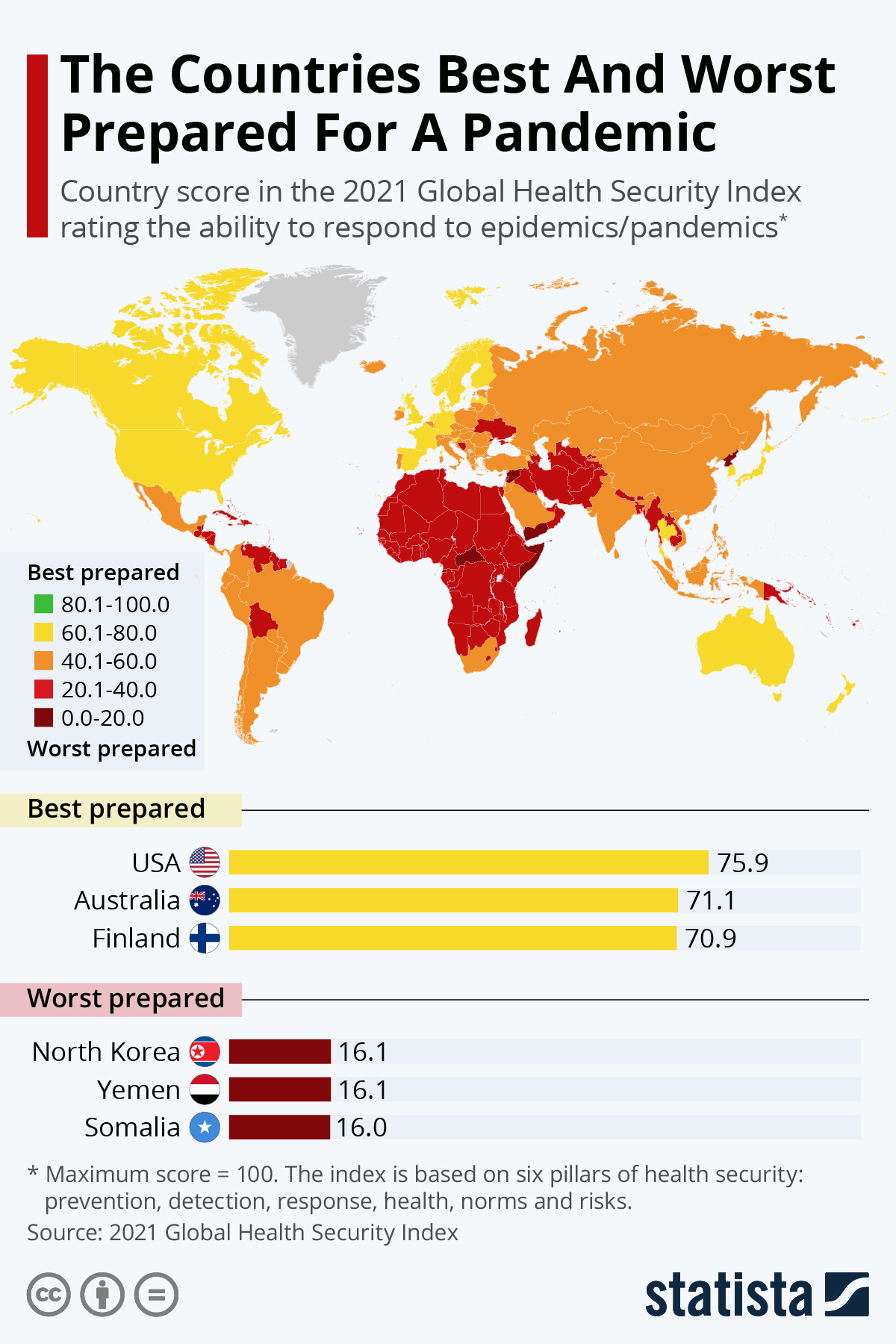


Infographic: The Countries Best And Worst Prepared For An Epidemic | Statista You will find more infographics at Statista


World Health Organization recommends people take simple precautions against virus to reduce exposure and transmission

Justin McCurry

Mon 27 Jan 2020 09.19 GMT
https://www.theguardian.com/science/2020/jan/27/coronavirus-how-to-protect-yourself-from-infection

A Chinese man wears a protective mask, goggles and coat as he stands in a nearly empty street during the Chinese New Year holiday in Beijing
A Chinese man wears a protective mask, goggles and coat during the lunar new year holiday in Beijing. Health authorities are urging people to take precautions against the spread of the coronavirus. Photograph: Kevin Frayer/Getty Images

The spread of the coronavirus across China and to at least 10 other countries including the US, South Korea and Japan has prompted experts and health authorities to offer advice on how to reduce the chances of contracting the illness.

All but four of the 80 reported deaths so far have been recorded in Hubei province where the outbreak started. Experts have warned, however, that about 100,000 people may already be infected – far more than the 2,700 cases reported by China’s National Health Commission in China, Hong Kong, Macau and Taiwan.
What is the coronavirus and how worried should we be?
Read more

The World Health Organisation is recommending that people take simple precautions to reduce exposure to and transmission of the virus, for which there is no specific cure or vaccine.

The UN agency advises people to:

    Frequently wash their hands with an alcohol-based hand rub or warm water and soap

    Cover their mouth and nose with a flexed elbow or tissue when sneezing or coughing

    Avoid close contact with anyone who has a fever or cough

    Seek early medical help if they have a fever, cough and difficulty breathing, and share their travel history with healthcare providers

    Avoid direct, unprotected contact with live animals and surfaces in contact with animals when visiting live markets in affected areas

    Avoid eating raw or undercooked animal products and exercise care when handling raw meat, milk or animal organs to avoid cross-contamination with uncooked foods

Despite a surge in sales of face masks in the aftermath of the coronavirus outbreak, experts are divided over whether they can prevent transmission and infection of the airborne disease.

There is some evidence to suggest that masks can help prevent hand-to-mouth transmissions, given the large number of times people touch their faces – 23 times an hour, according to one study.

Dr David Carrington, of St George’s, University of London, told BBC News that “routine surgical masks for the public are not an effective protection against viruses or bacteria carried in the air”, because they were too loose, had no air filter and left the eyes exposed.

Masks could, however, help lower the risk of contracting a virus through the “splash” from a sneeze or a cough and offer some protection against hand-to-mouth transmissions, he said.

The consensus appears to be that wearing a mask can limit – but not eliminate – the risks, provided they are used correctly. That means securing them over the mouth, chin and nose, using the bendable metal strip at the top to keep it snug against the contours of the nose.

Experts say the best way to avoid germs, with coronavirus and other airborne illnesses, is to wash your hands thoroughly and frequently, try not to touch your face or eyes and avoid contact with people displaying symptoms.

WHO experts advise against wearing gloves on the basis that hand-washing is more important and people wearing gloves are less likely to wash their hands.


Why we should be skeptical of China’s coronavirus quarantine
As a historian of epidemics, I’m not optimistic it will turn out well


By Howard Markel
Howard Markel is the George E. Wantz distinguished professor of the history of medicine, a professor of pediatrics and communicable diseases, and the director of the Center for the History of Medicine at the University of Michigan. He is the author of “Quarantine!” and “When Germs Travel.”


https://www.washingtonpost.com/outlook/why-we-should-be-skeptical-of-chinas-coronavirus-quarantine/2020/01/24/51b711ca-3e2d-11ea-8872-5df698785a4e_story.html

The new respiratory coronavirus, first detected in Wuhan, China, last month, is like most germs: It travels. It has jumped to Beijing, Shanghai, Shenzhen, the southern Chinese province of Guangdong (home to SARS in 2003) and across borders to Taiwan, South Korea, Thailand, Japan, and even Seattle and Chicago. At this writing, more than 800 people have contracted it, and 26 have died.

To combat the contagion, the Chinese government has taken the extraordinary step of quarantining the city of Wuhan, as well as neighboring districts and cities. The borders are sealed, and all transportation out is blocked. Officials closed the public transportation systems. Friday morning, more than 35 million people woke up facing aggressive curtailments of their freedom.

Having spent my medical and academic career studying these issues, I am astounded by what is already the single largest quarantine in recorded history. As a physician, I cannot yet give a prognosis of how all this will work out. But as a historian of quarantines and epidemics — one who has read, seen or written similar sad stories too many times — I am not terribly optimistic it will turn out well.

China is in a real bind. If Beijing doesn’t act — or delays reporting on the situation, as officials did for five long months during the SARS (severe acute respiratory syndrome) epidemic of 2002-2003 — then the virus will spread quickly and, if it proves especially lethal, could kill many more people than it already has. China will also incur international blame, economic sanctions or worse. Doing nothing is not an option in an era when information, fear and gossip travel at the speed of electrons and the public invariably demands action from leaders.

On the other hand, by taking the draconian step of closing down densely populated urban areas, China can hope only to diminish the coronavirus’s spread, knowing full well that some additional infections, or many, will inevitably occur. It takes just a few cases to spread outside the Chinese quarantine zone before critics say it has failed. As Lawrence O. Gostin, a public health law professor at Georgetown, has, for example, already said, “It’s very unlikely to stop the progressive spread.”

The U.S. has stopped Ebola before. But it may never repeat that success.

It’s possible that this coronavirus may not be highly contagious, and it may not be all that deadly. We also do not know yet how many people have mild coronavirus infections but have not come to medical attention, especially because the illness begins with mild to moderate respiratory tract symptoms, similar to those of the common cold, including coughing, fever, sniffles and congestion. Based on data from other coronaviruses, experts believe the incubation period for this new coronavirus is about five days (the range runs from two to 14 days), but we do not yet know how efficiently this coronavirus spreads from infected person to healthy person. And because antibodies for coronavirus do not tend to remain in the body all that long, it is possible for someone to contract a “cold” with coronavirus and then, four months later, catch the virus again.

The case fatality rate, a very important statistic in epidemiology, is calculated by dividing the number of known deaths by the number of known cases. At present, the virus appears to have a fatality rate of about 3 percent, which mirrors that of the influenza pandemic of 1918.

But what if there are 100,000 Chinese citizens in Wuhan with mild infections that we do not know about? That would lower the case fatality rate to a mere 0.02 percent, which comes closer to seasonal flu death rates. If that’s the case, a major disruption like the Chinese quarantine would seem foolish and cost a fortune in terms of public health efforts, interrupted commerce, public dissonance, trust, good will and panic.

Even open societies such as the United States have stringent laws regarding quarantine during epidemics, but they are rarely used because they are so poorly tolerated by citizens. Nevertheless, Americans have a long history of misapplying the quarantine. Russian Jewish immigrants in New York City in 1892, San Francisco’s Chinatown in 1900, and more recently gay men and Haitians in the early years of the AIDS epidemic were all stigmatized, isolated and blamed for the spread of contagious diseases. In many instances, some of these “undesirable” groups were inappropriately quarantined; their health needs were routinely ignored; and some even contracted deadly diseases while in isolation.


None of this is to say that extreme quarantines can’t be effective. In 2004, I attended an international meeting focused on examining the public health response to the SARS epidemic the year before. One panel featured the health officers of Singapore, Beijing, Hong Kong and Toronto. Singapore and Beijing had imposed the harshest and most restrictive quarantines and had the best results in terms of decreasing the disease’s spread and rates of morbidity and mortality. Hong Kong, and to a much greater extent Toronto — both open societies — applied far more lax containment policies and experienced much greater spread of the disease and more deaths.

But that doesn’t necessarily mean autocratic nations, such as China, are better equipped to contain contagious diseases. When the public trusts leaders and health authorities, it is easier to establish wide-scale cooperation, clear lines of communication and appropriate, humane health care. Civic-minded, community-wide, voluntary disease containment and mitigation efforts — such as those adopted in Mexico City during the 2009 H1N1 influenza pandemic, when officials inspired buy-in from the public to enact bans on social gatherings, school closures, isolation of the ill and at-home quarantines for those suspected of having contact with sick people — have been shown to work well. That is certainly the prescription I would write, and it’s not one that extreme measures are likely to engender.

Microbes, as agents of illness and death, are the ultimate social leveler. They bind us and, when transmitted through a filter of fear, have the power to divide. China has deemed this contagious disease to be too dangerous, or poorly understood, to take any chances with the public’s health. But the country also has a moral imperative to provide safe and compassionate medical care for those confirmed or suspected to be infected by the coronavirus. Equitable and fair attention to adequate housing; individual rights; economic and recreational needs; cultural and religious beliefs and practices; Internet, telecommunications and other connectivity; and the emotional, psychological and social difficulties patients invariably experience in isolation are as essential to a quarantine effort as the hue and cry of rounding up victims. Such human considerations cannot, of course, eradicate the many problems caused by the experience of quarantine, but they can reduce those burdens.

This is the question that will shape the story of this coronavirus outbreak: Not whether China will quarantine other cities or impose still more draconian edicts, but whether it is up to the enormous task of caring for those separated from the rest of society.